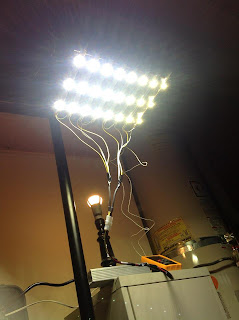
One LED invention made to Walmart, Yahoo search G7 and soon maybe Amazon search, too (G6 now).
XSHADE is also in for Yahoo search G7.
One more baby related product made to WestPoint G7
Thursday, November 26, 2009
Tuesday, February 3, 2009
Wednesday, January 7, 2009
Another invention got picked as EN product search
This is my second G7 and hope it will become an G8 soon; last one fail to become G8. But I am holding high hope for this one since its much easier to make and should be pretty easy to sell.
Friday, December 5, 2008
Are companies still looking for new product at such a bad time?
At such a bad time, retailers need outstanding product more than ever. They might see their existing product decline in sales, they would need something better to stimulate buyers to buy.
Of course better can have many different means. If a product can save user money, great. Save time, not as attractive as saving money at this moment; but also great... that's why companies still looking for new product, maybe more than ever. However, they also have to be stingy on development budget. The lower the cost the better. That's why EE likes Holly's bed skirt shoe storage so much. The development cost is really close to nothing.
So it's good time and also a bad time. They are looking harder but they also examining harder.
My friend, who is a channel guy at consumer electronic field, told me that existing merchant are either dying off or just enduring. Some of them can survive 2-3 years like this if without much activity. Some may close their eyes but most of them still keep their eyes open for opportunity as always. However they won't make any move unless they see a real exciting opportunity.
So if you see market being very quiet now, that's because they are all in this looking mode. Small opportunity won't interesting them anymore.
Of course better can have many different means. If a product can save user money, great. Save time, not as attractive as saving money at this moment; but also great... that's why companies still looking for new product, maybe more than ever. However, they also have to be stingy on development budget. The lower the cost the better. That's why EE likes Holly's bed skirt shoe storage so much. The development cost is really close to nothing.
So it's good time and also a bad time. They are looking harder but they also examining harder.
My friend, who is a channel guy at consumer electronic field, told me that existing merchant are either dying off or just enduring. Some of them can survive 2-3 years like this if without much activity. Some may close their eyes but most of them still keep their eyes open for opportunity as always. However they won't make any move unless they see a real exciting opportunity.
So if you see market being very quiet now, that's because they are all in this looking mode. Small opportunity won't interesting them anymore.
Thursday, December 4, 2008
Florida Tampa trip
Also I have my daughter's photo in my office, just to remember the tough time we are having.
Tuesday, November 18, 2008
I am at Billings Montana
Wednesday, November 12, 2008
My thought on how to win a Live Product Search
How to win a Live Product Search
One word answer: Quality.
The quality of your invention, the quality of competition and of course the quality of your presentation will determine your chance of winning.
First of all, Let’s talk about the quality of competition. Let’s face it; you can’t control the quality of competition. I think the chance to win a live product search is much lower compare if you pitch it to a company that is willing to review your idea. EN disclosed that at Spenser’s gag search, they received hundreds ideas and sent over 40 ideas (G7) for Spenser’s to review. Needless to say, they are all out standing ideas. At end, Spenser’s picked only 3. That means the other near 40 good ideas was rejected. Among them, probably over half of them would be accepted if they approach to a company alone. So, see what competition can do to you? So if you have an idea that has been rejected at this last stage like I do, don’t give it up, pitch it to other companies and I would say you have a very good chance of winning something.
Now the quality of your idea. I can’t teach anyone on how to produce a high quality invention. Heck, I can’t even tech you how to invent. creativity is a special talent given by God, in my opinion. But once you have an idea, you want to ask yourself if this is high quality invention. Even if it is, while you still have time, keep improve it. Add more innovation on to it. Just think how precious your $25 submission fee is; don’t let it go wasted. No to mention how precious an opportunity that fits your idea is.
The last part is the quality of your presentation. Don’t believe what EN member told you about they are experts of invention business and they can spot good invention at just one glance. The baseline is you still need to present your idea to win. You need to put down description and prepare material to put together an entry. Think about who is going to read your presentation. Think that you are presenting to company executive and marketing people. You are not writing a patent application nor tech spec. Make sure your idea description can hook them up in just first two lines. If you have a presentation material (photo, video). Get them on hook within their first look. No body likes to read boring stuff, even engineers like interesting reading. Just leave enough detail for them to figure out how your stuff works. They will have time to figure it out. But for executives, you only have few seconds before they decide your fate
One word answer: Quality.
The quality of your invention, the quality of competition and of course the quality of your presentation will determine your chance of winning.
First of all, Let’s talk about the quality of competition. Let’s face it; you can’t control the quality of competition. I think the chance to win a live product search is much lower compare if you pitch it to a company that is willing to review your idea. EN disclosed that at Spenser’s gag search, they received hundreds ideas and sent over 40 ideas (G7) for Spenser’s to review. Needless to say, they are all out standing ideas. At end, Spenser’s picked only 3. That means the other near 40 good ideas was rejected. Among them, probably over half of them would be accepted if they approach to a company alone. So, see what competition can do to you? So if you have an idea that has been rejected at this last stage like I do, don’t give it up, pitch it to other companies and I would say you have a very good chance of winning something.
Now the quality of your idea. I can’t teach anyone on how to produce a high quality invention. Heck, I can’t even tech you how to invent. creativity is a special talent given by God, in my opinion. But once you have an idea, you want to ask yourself if this is high quality invention. Even if it is, while you still have time, keep improve it. Add more innovation on to it. Just think how precious your $25 submission fee is; don’t let it go wasted. No to mention how precious an opportunity that fits your idea is.
The last part is the quality of your presentation. Don’t believe what EN member told you about they are experts of invention business and they can spot good invention at just one glance. The baseline is you still need to present your idea to win. You need to put down description and prepare material to put together an entry. Think about who is going to read your presentation. Think that you are presenting to company executive and marketing people. You are not writing a patent application nor tech spec. Make sure your idea description can hook them up in just first two lines. If you have a presentation material (photo, video). Get them on hook within their first look. No body likes to read boring stuff, even engineers like interesting reading. Just leave enough detail for them to figure out how your stuff works. They will have time to figure it out. But for executives, you only have few seconds before they decide your fate
Friday, November 7, 2008
Have you been asked for prototype?
As an experienced inventor, I must advise new inventor to proceed with prototype request carefully. You wan to know who is asking for prototype and why?I had been asked for prototype from an invention company for 3 times. They looked at my invention ideas and told me they would need a prototype. I said no problem and turn around built one myself for them, for all 3 different ideas. And they took a look and said No on all 3 cases after they looked at my prototype, and their comments were like, this market doesn't need another one of these. Come on, they could have told me so after the looked at my drawing and before I built my prototype. Later on I found out they also have prototyping service. They just want to sell you their service, and not really interesting at your idea. So be very careful, don’t believe everything people tell you. Be aware of praises that came too easy, find a reputable reviewer… There are a lot of sharks out there, they all want your money but doesn’t really want to help you.
The photo is a working cupholder prototype, despite the look, it really work great.
Labels:
cupholder,
invention company,
prottype
Tuesday, November 4, 2008
I got a G7 from EN and I voted this morning
And when I turned into office this morning, I checked my EN Live product search dash board. One of my invention got G7, which means it will be presented to manufacture, in this case Spencer's.
I am very happy, I think this will be a good day. Praise the Lord.
Monday, November 3, 2008
With Daughter at local park
Wednesday, October 29, 2008
In rememberance of Daigwa

Daigwa (if you read Chinese: 呆瓜) died last month at my brother's house at LA. He lived with me for over 12 years and I gave him to my brother at my wife's late pregnancy months. Before that Diagwa had also live with my brother back at Taiwan for 8 years so he was still among family. During his last two years, I only saw him 4-5 times and his condition had became worse and worse due to old age. He practically lost his sight and almost lost every tooth at his last 3 months.I have one invention submitted to Edison Nation and I like to contribute that invention to him. The morose of his condition create the need for this product. I can't show my invention yet but I would like to show one of his photo here.
Labels:
Daigwa,
Edison Nation,
invention,
呆瓜
Monday, October 20, 2008
How to make PC fan less noise
Wednesday, October 15, 2008
The place I work
Saturday, September 6, 2008
My brag, this is also a very good design in US story.

Do you know who built the very first US made CD-ROM? Not one, but a small team, and I was one of team. Time was 1993, at then, all CD-ROM were made from The picture on left is me (Boy was I young?) The right picture is entire s/w team.
Labels:
8032,
First US CD-ROM,
Oak Technology,
Sunnyvale
Friday, August 29, 2008
The secret of becoming an Everyday Edison?
I am selected as an Everyday Edison at their season 3 casting call. And I am working with them for my inventions at their innovation station and I had my successes and failures. Although I may not the best person to provide tips on how to become a winner for their show or product search; I do have my own observations and conclusions. I can post it on Edison Nation or inventorspot yet I choose not to. I like to keep a lose secret so I don't create strong competitor out there. So if you see this, just keep it to yourself and use it for yourself.
First, let’s look their official selection requirements:
1) The product/idea must have mass market appeal.
2) The product/idea must have novelty in order to get IP protection.
3) The product/idea must be able to be developed within a year in their workshop.
I can’t stress enough on how important requirement 1 and 2 are; yet I am more interesting at how requirement 3 will work out.
They said a year; in fact it’s more like 3 months at engineer department, and 3 months at marketing to manufacturing. They spent 6 months on selection process itself and left very limited time to develop each product. One observation from Stephen Key, a famous inventor is quoted and also at link
I noted that the products shared several important qualities. Each had a retail price that fell between $20 and $50. Additionally, only a single product was electronic. The remainder were extremely low-tech. EE’s development team (which is also featured on their website) simply doesn’t possess engineering skill needed to design and produce high-tech products. So, it appears clear that a product that is too expensive, too inexpensive, or too technological will not be selected.
Yes, I also noticed electronic is not their strong suit, they are good about wood or plastic, maybe some basic electrical; but not electronic. If there are some existing parts they can buy then maybe they can make it.
But why the $20-$50 comment? I think the reason is that they may become the vender of that product to their retailer customer. If a product only sells for $5 dollars in a mass production, do you think they want to go in and handle that kind of scale to make it economic sound? They are shooting for high profit margin and good profit in small to media quantity production. It would be best without any major investment.
And there is another piece of comment also from Steven:
The main focus of the TV show appears to be demonstrating the complex process that is required to bring a product to market, and especially how difficult it can be. EE wants to go look good – if you bring them a product that is already fairly finished or polished, part of the glory they seek is diminished. They want ideas they can actually mold and work on.
I think it’s also true for the TV show, but I am not so sure about live product search , but we will see.
First, let’s look their official selection requirements:
1) The product/idea must have mass market appeal.
2) The product/idea must have novelty in order to get IP protection.
3) The product/idea must be able to be developed within a year in their workshop.
I can’t stress enough on how important requirement 1 and 2 are; yet I am more interesting at how requirement 3 will work out.
They said a year; in fact it’s more like 3 months at engineer department, and 3 months at marketing to manufacturing. They spent 6 months on selection process itself and left very limited time to develop each product. One observation from Stephen Key, a famous inventor is quoted and also at link
I noted that the products shared several important qualities. Each had a retail price that fell between $20 and $50. Additionally, only a single product was electronic. The remainder were extremely low-tech. EE’s development team (which is also featured on their website) simply doesn’t possess engineering skill needed to design and produce high-tech products. So, it appears clear that a product that is too expensive, too inexpensive, or too technological will not be selected.
Yes, I also noticed electronic is not their strong suit, they are good about wood or plastic, maybe some basic electrical; but not electronic. If there are some existing parts they can buy then maybe they can make it.
But why the $20-$50 comment? I think the reason is that they may become the vender of that product to their retailer customer. If a product only sells for $5 dollars in a mass production, do you think they want to go in and handle that kind of scale to make it economic sound? They are shooting for high profit margin and good profit in small to media quantity production. It would be best without any major investment.
And there is another piece of comment also from Steven:
The main focus of the TV show appears to be demonstrating the complex process that is required to bring a product to market, and especially how difficult it can be. EE wants to go look good – if you bring them a product that is already fairly finished or polished, part of the glory they seek is diminished. They want ideas they can actually mold and work on.
I think it’s also true for the TV show, but I am not so sure about live product search , but we will see.
Wednesday, August 13, 2008
What my family think
I had shown several ideas which I thought were good among our family members, some of them would say “The idea is great, but don’t spend any of your own money on it. Find someone to support you.” Well, I know that if you don’t support your own idea then no one will support it, yet I still appreciate the fact that didn’t say anything major negative about it. When they do say something negative I pay a lot of my attention to what they say. Then I either improve my idea or simply put them to back burner (a very slow back burner). I’ve learn only invest on my best horses.
Selected by Everyday Edison really mean a lot to me, I start to win back some lost support from within our family. My wife has started to introduce me as an inventor to her friends. It was like a family secret before. I am really happy and I praise the Lord.
Thursday, August 7, 2008
To give up ideas
Now it's a good time to talk about what to give up. One can come up a good idea, very twisty and does something magically to satisfy his needs.
That’s great. If no one shares his opinion, he can always keep it to himself and use it for himself only. But is that really your goal? If your goal is to license your idea or to commercialize your product, which means to sell many, you really need to think about whether others will share your opinion. Do they have same need? Probably they do. How many of them? How much are they willing to pay to satisfy that need? (Here we are not merely talking about money; Some time inconvenient to keep/to carry some extra dead weight also counts) Can a manufacture fulfills such a need under cost… The last point really some experience to make the judgment call.
But most inventors seem have problem to accurate estimate the most fundamental question of people’s need and willingness to pay. They seem often over estimate the need and willingness of consumers in favorite of their ideas. Can you blame them, we often made same mistake as they do. That’s why we need help from others to do that estimation for us.
That’s great. If no one shares his opinion, he can always keep it to himself and use it for himself only. But is that really your goal? If your goal is to license your idea or to commercialize your product, which means to sell many, you really need to think about whether others will share your opinion. Do they have same need? Probably they do. How many of them? How much are they willing to pay to satisfy that need? (Here we are not merely talking about money; Some time inconvenient to keep/to carry some extra dead weight also counts) Can a manufacture fulfills such a need under cost… The last point really some experience to make the judgment call.
But most inventors seem have problem to accurate estimate the most fundamental question of people’s need and willingness to pay. They seem often over estimate the need and willingness of consumers in favorite of their ideas. Can you blame them, we often made same mistake as they do. That’s why we need help from others to do that estimation for us.
Monday, August 4, 2008
Back to work
I get at least one new job offer already (praise the Lord) and I am going back to work, but I am not giving up inventing.
I call what I would like to be doing: “sustainable inventing.”
I just like to invent new things which I do best and have little time or resource to slow down and develop ideas into real products, which involve manufacture, marketing …. I leave them to someone else.
I know by doing it this way, it would be hard to find people with same enthusiastic to be behind some of my ideas. But thanks to internet, this world has become flatter and this has just become a little bit easier. And if I can’t find people with same enthusiastic with me, that may be a good thing, means maybe I should recheck my idea. Nevertheless, don’t let one idea stop the others from coming.
I don’t mind that I have to keep a day job so I can keep inventing, at least it force me to get out of house and get more stimulations along the way.
I call what I would like to be doing: “sustainable inventing.”
I just like to invent new things which I do best and have little time or resource to slow down and develop ideas into real products, which involve manufacture, marketing …. I leave them to someone else.
I know by doing it this way, it would be hard to find people with same enthusiastic to be behind some of my ideas. But thanks to internet, this world has become flatter and this has just become a little bit easier. And if I can’t find people with same enthusiastic with me, that may be a good thing, means maybe I should recheck my idea. Nevertheless, don’t let one idea stop the others from coming.
I don’t mind that I have to keep a day job so I can keep inventing, at least it force me to get out of house and get more stimulations along the way.
Wednesday, July 30, 2008
Subscribe to:
Posts (Atom)